
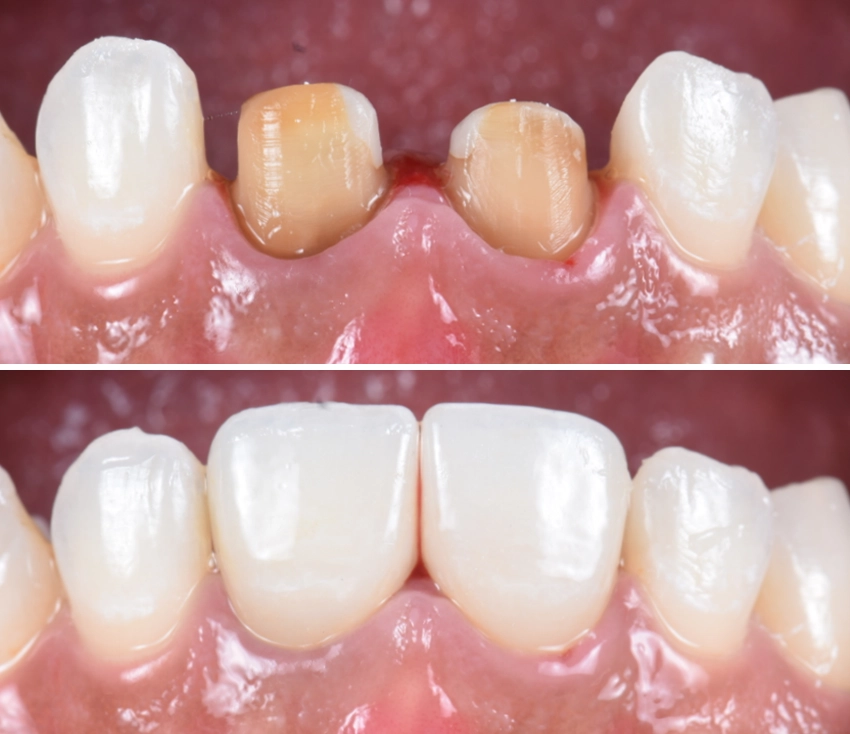
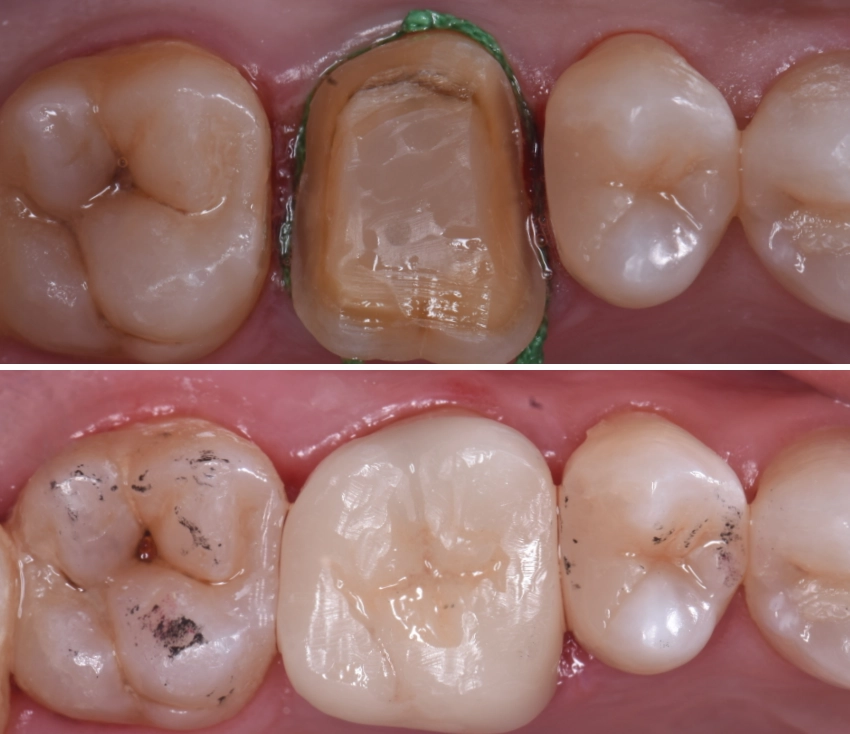

Crown
A dental crown is a protective cap designed to resemble the shape of a natural tooth and placed over the entire tooth structure to protect teeth that are damaged or weakened.
Dental Crowns: When Does a Tooth Need a Crown and What Is Its Function?
Teeth that are cracked, fractured, or have experienced extensive damage are often no longer adequately restored with regular fillings alone. In certain situations, additional protection is needed to help keep the tooth strong and comfortable for long-term use. One of the most commonly recommended treatments is a dental crown.
As prosthodontists, we often see patients who complain that their teeth feel fragile while chewing, large fillings repeatedly come loose, or teeth that have undergone root canal treatment feel weaker than before.
In these situations, dental crowns can help protect the remaining tooth structure while restoring both function and aesthetics more optimally.
At PUTIH Dental, dental crown treatment is performed using a more detailed, precise, and personalized approach to help create crowns that feel comfortable, look natural, and are tailored to each patient’s condition.
What Is a Dental Crown?
A dental crown is a protective cap designed to resemble the shape of a natural tooth and placed over the entire tooth structure to protect teeth that are damaged or weakened.
The purpose of a crown is not only to improve the appearance of the tooth, but also to:
- Protect weak or cracked teeth
- Restore chewing function
- Strengthen teeth after root canal treatment
- Restore tooth shape and aesthetics
- Help preserve natural teeth for longer
Dental crowns are designed to mimic the shape, size, and color of natural teeth so they continue to look natural in everyday use.
When Does a Tooth Need a Crown?
Not all cavities require a crown. However, in some cases, the remaining tooth structure becomes too weak for a regular filling to withstand chewing pressure effectively.
Common situations that may require a crown include:
- Teeth with large fillings
- Cracked or fractured teeth
- Teeth after root canal treatment
- Severely worn teeth
- Certain tooth shape or discoloration issues
- Replacement of old crowns that are no longer functioning optimally
As dentists, we frequently see patients who only realize their tooth is cracked after experiencing pain while chewing or after repeated filling failures.
That is why early evaluation is important to help determine whether the tooth can still be restored with a filling or requires additional protection through a dental crown.
Zirconia vs Porcelain Crowns: Which Is Better?
When choosing a dental crown, one of the most common questions patients ask is: “Which is better — zirconia or porcelain crowns?”
As prosthodontists, this question is very common because modern crown materials continue to evolve in both strength and aesthetics.
In reality, there is no single crown material that is ideal for everyone. The choice usually depends on the tooth position, bite condition, aesthetic needs, and each patient’s chewing habits.
At PUTIH Dental, every crown treatment is planned individually with a more detailed and precise approach to help create crowns that feel comfortable, look natural, and provide long-term durability.
Does Getting a Dental Crown Hurt?
Questions such as “Does getting a dental crown hurt?” are very common before treatment.
In general, crown procedures can be performed comfortably because the treatment is done gradually and tailored to each patient’s condition.
Most patients typically only experience:
- Mild pressure during tooth preparation
- Temporary mild sensitivity
- A short adjustment period after the crown is placed
If necessary, local anesthesia may also be used to improve comfort during treatment.
As prosthodontists, many patients initially worry that crowns may feel bulky or unnatural. However, with proper planning and adjustment, crowns can generally feel comfortable and integrate naturally into daily bite function.
Why Do Dental Crowns Require High Precision?
Dental crowns are not simply “caps for teeth.” Crowns that lack precision may lead to:
- Food trapping
- Gum inflammation
- Uncomfortable bite pressure
- Crowns becoming damaged or loose more easily
That is why precision throughout the crown fabrication process is extremely important.
At PUTIH Dental, every crown is designed using a more detailed digital dentistry workflow and digital intraoral scanners to help achieve more accurate and comfortable results.
In-House Dental Lab at PUTIH Dental
One of the advantages of crown treatment at PUTIH Dental is the presence of an in-house dental laboratory, allowing dentists to be directly involved in the design and quality control process of each crown.
As prosthodontists, close communication between the dentist and the dental lab is extremely important to help create crowns that are:
- Precise
- Comfortable to use
- Stable during chewing
- Natural in shape and color
With an in-house dental lab, crown quality can be monitored more carefully — from shape, fit, and color to final aesthetic details before placement.
This approach helps create crowns that are more personalized and harmonious with the patient’s overall smile.
How Long Do Dental Crowns Last?
The longevity of dental crowns varies depending on:
- The condition of the supporting tooth
- Chewing habits
- Oral hygiene
- The crown material used
With proper care and regular dental checkups, crowns can last for many years in daily use.
The Crown Treatment Approach at PUTIH Dental
At PUTIH Dental, crown treatment is performed using a more personalized and carefully planned approach to help create restorations that are not only aesthetic, but also comfortable and functional in the long term.
Treatment is performed by prosthodontic specialists while considering:
- Bite function
- Tooth structure
- Smile harmony
- Patient comfort
- Aesthetic details and natural appearance
With the support of digital scanners, detailed treatment planning, and an in-house dental laboratory, every crown is designed more precisely to blend naturally with the surrounding teeth.
FAQ Dental Crowns
What is a dental crown?
A dental crown is a protective cap placed over a damaged or weakened tooth to restore and strengthen it.
Do dental crowns look natural?
Yes. Modern crowns are designed to closely resemble natural teeth in both color and shape, allowing them to look natural while smiling and speaking.
How long do dental crowns last?
With proper care, dental crowns can last for many years depending on the condition of the tooth and daily habits.
Is a crown necessary after root canal treatment?
In many cases, crowns are recommended after root canal treatment to help protect the tooth from cracking or fracturing.
Consult Now
Other Treatments
Scaling
Basic Treatment

Whitening
Basic Treatment
Dental Fillings
Restoration
Braces & Clear Aligner
Orthodontics