
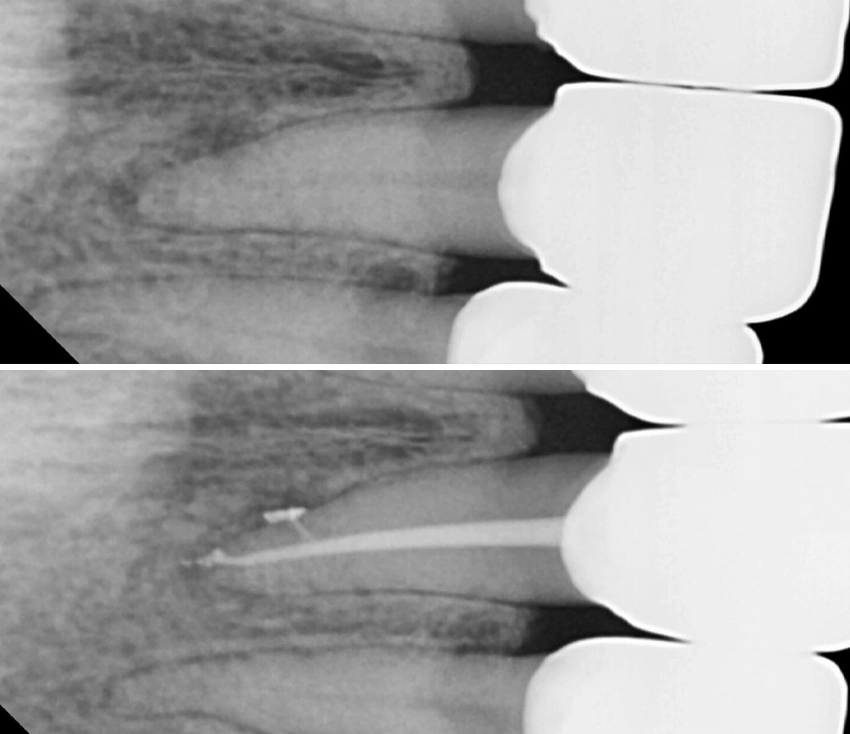
Root Canal Treatment
Root canal treatment is a procedure used to clean infected or inflamed nerve tissue from inside the root canal system of the tooth.
When Is It Needed and Does It Hurt?
Recurring tooth pain, prolonged sensitivity, or a throbbing sensation in the tooth are often signs that tooth decay has reached the dental nerve.
As dentists, we often see patients come in when the pain has already started affecting eating, sleeping, or daily activities. In these situations, a regular filling may no longer be enough to preserve the tooth, and root canal treatment may become necessary.
Unfortunately, root canal treatment is still often associated with fear and severe pain. In reality, with advances in modern dentistry, root canal treatment today can be performed in a far more comfortable, precise, and controlled way than many people imagine.
At PUTIH Dental, root canal treatment is performed by endodontic specialists using a minimally invasive and precision dentistry approach supported by dental microscope technology.
Dental microscopes allow dentists to see the root canal system with significantly greater magnification and detail, as root canals are often extremely small and complex — sometimes as thin as a strand of hair. With enhanced visualization, treatment can be performed more accurately to help preserve the natural tooth whenever possible.
What Is Root Canal Treatment?
Root canal treatment is a procedure used to clean infected or inflamed nerve tissue from inside the root canal system of the tooth.
Inside every tooth is pulp tissue that contains:
- Nerves
- Blood vessels
- Other soft tissues
When this area becomes inflamed due to deep cavities, cracks, or trauma, bacteria can enter and spread through the root canal system, causing pain and infection.
The goals of root canal treatment are to:
- Eliminate the source of infection
- Help preserve the natural tooth
- Reduce pain and inflammation
- Prevent tooth extraction whenever possible
When Is Root Canal Treatment Needed?
Not all cavities require root canal treatment. However, in some cases, tooth decay can gradually progress into the dental nerve and cause infection.
As dentists, we frequently see patients who initially experience mild symptoms, such as slight sensitivity to cold drinks or occasional tooth pain for several weeks. After further examination, it often turns out that the infection has already reached the nerve.
Signs that may indicate the need for root canal treatment include:
- Spontaneous or throbbing tooth pain
- Prolonged sensitivity to hot or cold
- Pain while chewing or biting
- Swollen gums around the tooth
- Darkening of the tooth color
- Abscess or gum swelling
In some cases, patients may not experience significant pain, yet infection is discovered through dental X-rays during routine examinations. That is why clinical and radiographic evaluations remain important to assess the condition of the nerve and surrounding infection more thoroughly.
The earlier a nerve infection is detected, the greater the chance of preserving the natural tooth with proper treatment.
Does Root Canal Treatment Hurt?
One of the most common questions patients ask is: “Does root canal treatment hurt?”
With modern anesthesia techniques and more precise technology, root canal treatment today is generally performed comfortably.
In fact, most patients come in already experiencing pain caused by the infection itself, and the purpose of treatment is to help eliminate the source of that pain.
During the procedure, patients typically only feel:
- Mild pressure
- Light vibrations from the instruments
- Minimal discomfort in certain areas
Modern endodontic treatment approaches have made root canal procedures significantly more comfortable compared to older perceptions about “nerve removal treatment.”
Why Isn’t an Infected Tooth Always Extracted Immediately?
Many patients ask whether a painful or infected tooth should simply be extracted.
At PUTIH Dental, our approach prioritizes preserving natural teeth whenever possible.
As dentists, natural teeth still offer many advantages that are difficult to fully replace, including:
- More natural chewing function
- Better bite stability
- More balanced chewing force distribution
- Healthier surrounding gum and bone tissues
That is why root canal treatment is performed to help eliminate infection while preserving teeth that can still be saved.
In many cases, with proper treatment and detailed evaluation, teeth that were once severely painful can still be preserved and function well for many years.
The Root Canal Treatment Process
In general, root canal treatment includes the following stages:
Examination and Diagnosis
The dentist evaluates the tooth through clinical examination and dental X-rays.
Root Canal Cleaning
Infected nerve tissue is removed from inside the root canal system.
Canal Disinfection
The canals are disinfected to help reduce bacteria and infection.
Root Canal Filling
The root canals are sealed using specialized calcium-based materials to help prevent reinfection and ensure biocompatibility.
Tooth Restoration
In some cases, the tooth may require a filling or crown after root canal treatment to strengthen the tooth structure.
How Long Does Root Canal Treatment Take?
The duration of root canal treatment varies depending on:
- The number of root canals
- Severity of infection
- Complexity of the tooth anatomy
Some cases can be completed in a single visit, while others may require multiple appointments.
Does a Tooth Become Fragile After Root Canal Treatment?
Teeth that have experienced significant structural damage may become more vulnerable to fractures.
That is why dentists may recommend:
- Restorative fillings
- Onlays
- Dental crowns
These restorations help protect the tooth structure and maintain long-term function.
What Happens If a Nerve Infection Is Left Untreated?
Untreated dental infections can become more serious and may lead to:
- Persistent pain
- Dental abscess
- Facial swelling
- Spread of infection to surrounding tissues
- Permanent tooth loss
- In severe cases, potentially life-threatening complications
The earlier the condition is treated, the better the chances of preserving the natural tooth structure
The Root Canal Treatment Approach at PUTIH Dental
At PUTIH Dental, root canal treatment is performed by endodontic specialists using a more detailed, modern, and precise approach.
One of the major challenges in endodontic treatment is the extremely small and complex anatomy of the root canal system. In fact, root canals can be as thin as a strand of hair and are often difficult to see with the naked eye.
That is why PUTIH Dental uses dental microscopes during root canal treatment to provide significantly enhanced magnification and illumination. This technology helps dentists perform treatment more accurately — from locating root canals and cleaning infected areas to ensuring the treatment is carried out as thoroughly as possible.
Currently, dental microscope technology is still not widely used in many dental clinics across Indonesia. However, at PUTIH Dental, microscope dentistry has become part of the treatment standard because even very small details can make a significant difference to long-term treatment success.
The goal of treatment is not only to eliminate infection and pain, but also to preserve the natural tooth whenever possible.
Treatment is designed to:
- Preserve natural teeth
- Clean infection more precisely and thoroughly
- Prioritize patient comfort during treatment
- Support better long-term outcomes
Beyond standard root canal procedures, PUTIH Dental also frequently receives referrals for more complex endodontic cases such as:
- Broken file removal
- Root canal retreatment
- Difficult-to-locate root canals
- Complex root canal anatomy
- Recurrent infections
With the support of dental microscopes and specialist care, these high-precision cases can be evaluated and managed more thoroughly.
Through a combination of specialist care, dental microscope technology, and precision treatment approaches, root canal treatment at PUTIH Dental is designed to help patients feel more comfortable, calm, and confident throughout the process.
Consult Now
Other Treatments
Scaling
Basic Treatment

Whitening
Basic Treatment
Dental Fillings
Restoration

Braces & Clear Aligner
Orthodontics